





Container
Optimize the packaging and deployment of applications in production environments, enhancing performance and minimizing risks during development.
Tư vấn
The future of enterprise computing increasingly points to the era of container-based application deployment. The traditional era with applications installed on physical servers or the era of virtual machines is gradually being left behind by the container era. Containers are a good way to package and run applications. But on a production environment, you need to manage containers that work without interruption. Kubernetes will rescue you from this situation.
Viettel Kubernetes Service (VKS) is a fully managed Kubernetes service, providing a cluster consisting of at least 4 virtual servers (Virtual Machines) pre-deployed with the Kubernetes platform, allowing customers to run applications on containers. /Pod, capable of rapidly scaling applications across multiple containers, deployed in parallel across multiple worker nodes. VKS solution helps customers to scale application system faster, easier, with higher availability at lower cost, as well as freeing DevOps developers/engineers from the hassle of building, administer, and monitor the infrastructure but instead focus on application development.
Benefits
-
Reliability
Viettel Kubernetes Service runs on virtualization infrastructure provided by VMWare. Viettel Kubernetes Service guarantees a monthly uptime rate of 99.95% to give you complete peace of mind.
-
Confidentiality
Viettel Kubernetes Service runs application Pods on separate Kubernetes clusters for each customer. No shared resources are used for this Kubernetes cluster. High level of isolation helps customers to build applications with good security.
-
Compatible with the Kubernetes community
Viettel Kubernetes Service runs on a platform that is certified to comply with Kubernetes. Therefore, applications managed by Viettel Kubernetes Service are fully compatible with applications managed by any standard Kubernetes environment.
Deploy a simple Web application
Deploying a simple website application on the Kubernetes system, from a practical point of view, is not necessary. It might seem unreasonable but in a more practical and advanced scenario where you need to deploy many simple web applications with as few resources as possible, Kubernetes is a good choice. Imagine, you are working for a dynamic advertising company that is developing a website to advertise for a customer in the consumer industry.
Each advertised brand requires a separate website, where all information about the brand, ingredients, uses, videos,… Each brand will be a separate application. In this case, Kubernetes - thanks to better resource allocation - would be cheaper than using separate physical servers for each website.
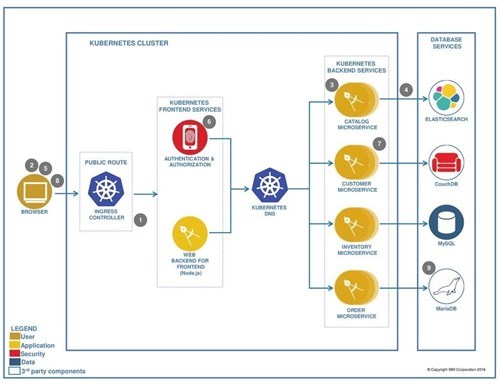
Architecture of Microservices
The classic scenario of Kubernetes is to deploy a complex application in a microservice architecture where separate components communicate with each other. Kubernetes treats developers for tasks such as detecting communication problems between components in the application, managing component behavior in the event of errors, or managing the authentication process between components. ingredient. Moreover, because more or less resources are needed for a specific component, Kubernetes will automatically adjust their scale up or down. This is an obvious advantage of the microservice architecture: scalability. You can scale a component instead of an entire application.
Kubernetes has built-in tools like Horizontal Pod Autoscaler, which help ensure that each microservice has an optimal number of copies. This means for sure that the application has enough resources to function smoothly without wasting precious resources. When the microservice architecture is chosen, Kubernetes simplifies the entire process of managing application components and greatly reduces the work required to get up and running the application.
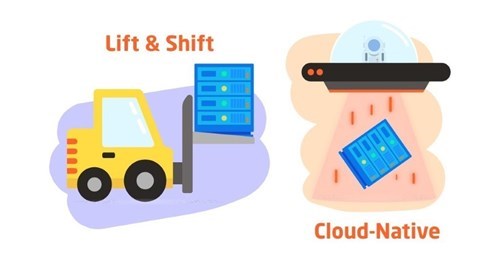
Lift and Shift - From physical server to cloud
This situation happens often. Applications are deployed on physical servers in data centers. For practical and economic reasons, customers want to move these applications to the cloud: either using Virtual Machines or onto large Pods in the Kubernetes cluster.
In the middle stage, moving applications to the Kubernetes cluster is not a bad approach. The application on the physical server will be migrated to the Kubernetes cluster and then broken down into many parts to become a complete native cloud application.
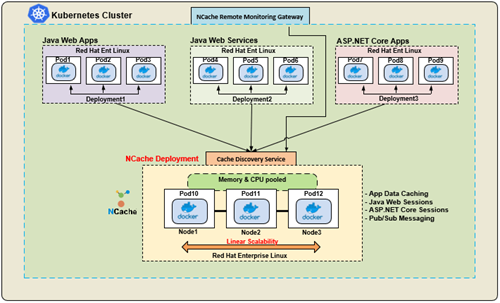
Compute power for resource consuming tasks
The Kubernetes cluster is a natural solution for managing the distribution of computations across multiple worker nodes. Developers only need to write a program to do the calculations, Kubernetes takes care of the rest.
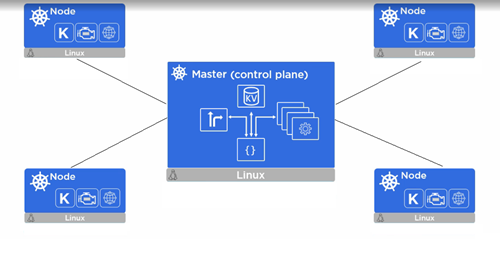
The service to automate the deployment and operation of Kubernetes clusters, helping users to save time and resources while eliminating manual impacts in the software development process.
The service to store and manage Container Images easily, fully support development of container-based applications as well as can easily connect to Docker and K8s.